Choosing the Right Multicore Cable: A Guide to APAR’s Industrial and Residential Range
Choosing the right multicore cable from a wide range can feel daunting, so here is a simple way to narrow it down.
Not Every Cable Should Be Carrying Every Load
Multicore cables are the workhorses of modern electrical systems. They power AC outdoor units, submersible pumps, industrial motors, control panels, and the connections between distribution boards and heavy appliances. Yet most installations get specified by habit rather than design — and the wrong multicore choice can mean voltage drop, premature failure, or unnecessary cost.
APAR’s multicore cable range is organised into three families, each engineered for a different category of use. Knowing the difference is the difference between a clean specification and a problem that surfaces three years in.
When You Actually Need a Multicore Cable
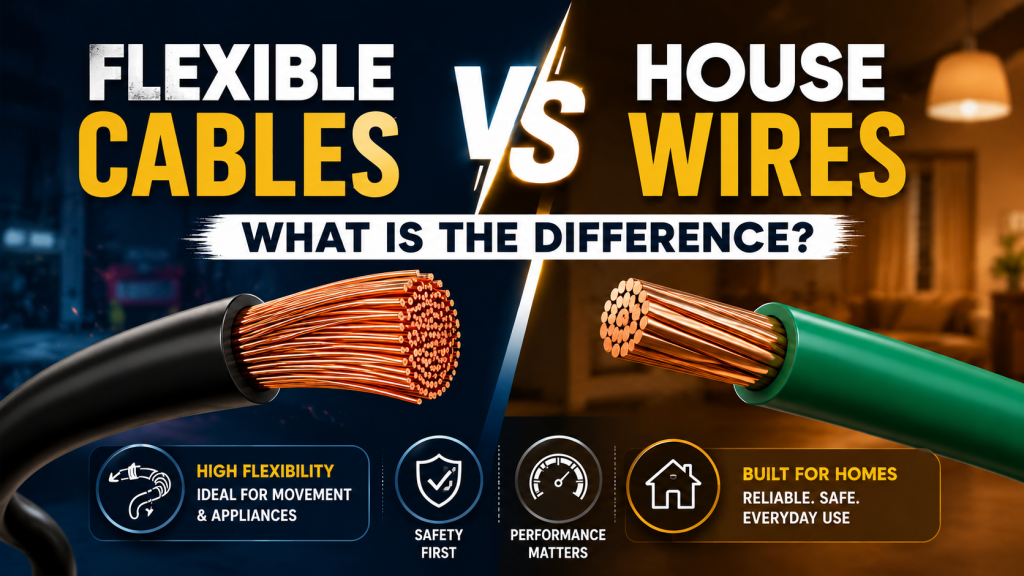
Single-core wires are the default for most circuits in a typical home — light fittings, fans, sockets, and switchboard runs. Multicore cables become essential when you need:
- Power to a single appliance with multiple conductors (AC outdoor units, geysers, motors)
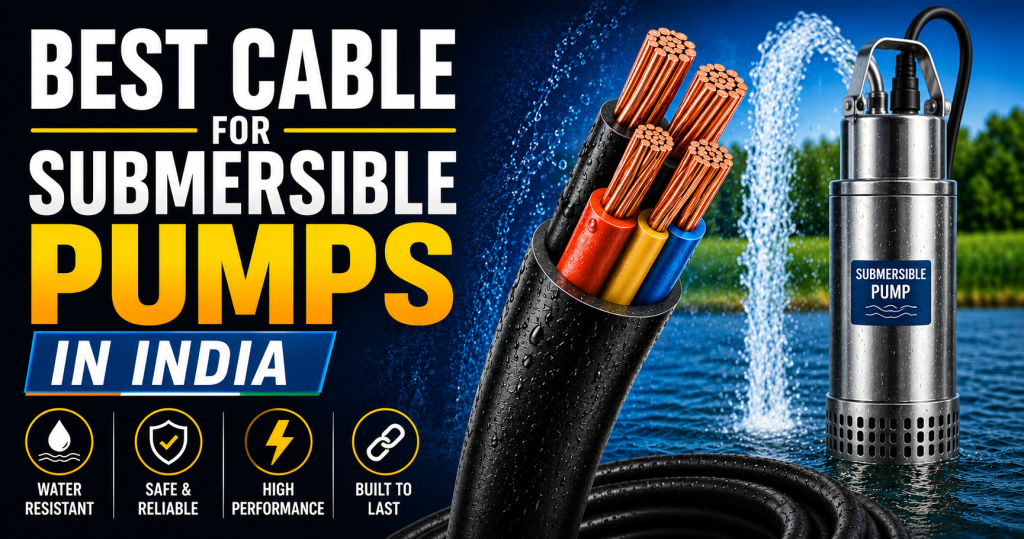
- Submersible pump connections from a borewell
- Long power runs between distribution boards and high-load equipment
- Industrial motors, control panels, and three-phase equipment
- Any application where the cable has to handle physical stress, ozone exposure, oil, or moisture
The APAR Multicore Range Explained
APAR Shakti Multicore — The Reliable Workhorse
The APAR Shakti Round Multicore uses high-purity copper conductors with flame-retardant PVC insulation and sheathing. It is the standard choice for residential AC connections, kitchen appliances, control panels, and low-voltage electrical boards. With 101% conductivity and a lead-free, self-extinguishing PVC compound, it covers the majority of household multicore needs reliably and economically.
APAR Mahashakti Multicore — Premium XLPO Engineering
The APAR Mahashakti Multicore uses APAR’s in-house developed XLPO (Cross-linked Polyolefin) compound — a step change above standard PVC. XLPO insulation is non-softening, non-dripping, and non-fusing. It is engineered for high-stress environments: industrial motors, robotics, automation systems, and any application where the cable will run under continuous heavy load. Available from 0.5 to 50 sq.mm in 2-, 3-, and 4-core configurations.
APAR Alumshakti Multicore — Cost-Effective Aluminium Performance
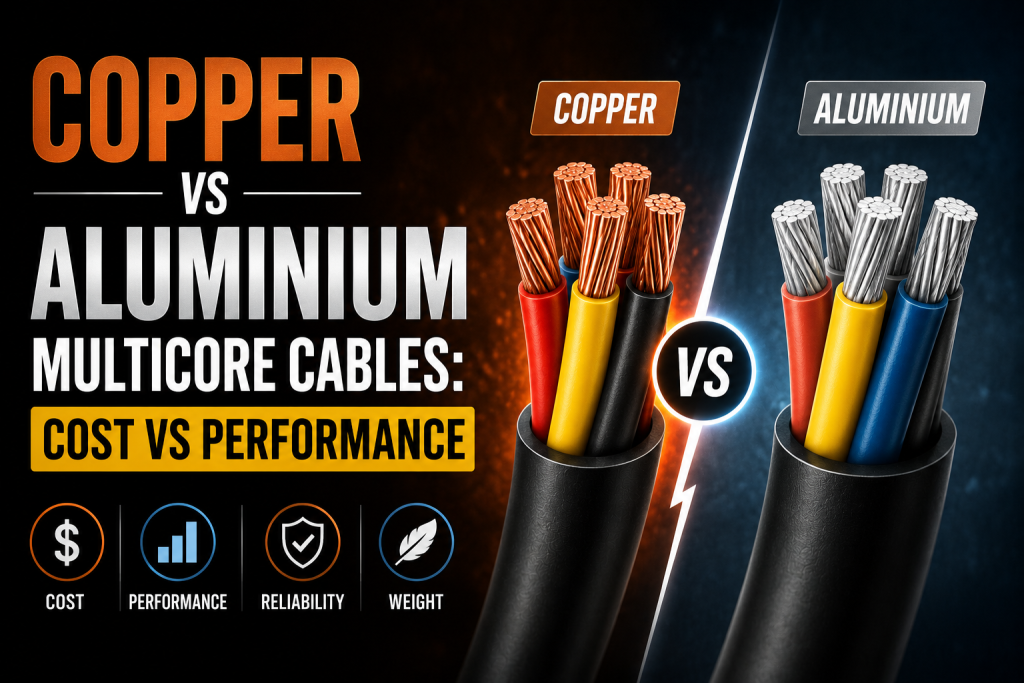
The APAR Alumshakti Multicore uses a stranded aluminium conductor with proprietary HR PVC insulation — delivering high current-carrying capacity at a significantly lower cost than copper. It is engineered specifically for long-distance power distribution, submersible pump applications in agricultural and domestic borewells, and utility-scale electrical work where copper economics do not apply.
A Decision Tree: Which One Belongs in Your Setup
- Residential AC, geyser, kitchen appliances: APAR Shakti Round Multicore.
- Submersible pump in a borewell: Alumshakti Flat Multicore (water- and oil-resistant flat sheath).
- Industrial motor, automation, or robotics installation: Mahashakti Round or Flat Multicore (XLPO).
- Long distribution runs in farms or large properties: Alumshakti Round Multicore (cost-effective aluminium).
- Tight-space installations or panel internals: Mahashakti Flat Multicore (space-saving with XLPO durability).
In Summary
Choosing a multicore cable is not just a question of how many cores or how many square millimetres. It is a question of what the cable will face every day — heat, load, moisture, ozone, mechanical stress — and which insulation chemistry was built for those conditions. APAR’s multicore range is structured so that a thoughtful specifier can match the cable to the job exactly, without paying for capability they will not use or accepting a compromise they will pay for later.
Choosing the right multicore cable for the job
Start with the application, then the construction. Round multicore suits general routing and conduit; flat suits tight spaces and submersibles. Copper gives the best conductivity and joints; aluminium saves weight and cost on large runs. Match cores and size to the load, and choosing the right multicore cable becomes straightforward.