Fire-Safe Wiring for High-Rise and Residential Buildings
Fire-safe wiring matters everywhere, but in high-rise and multi-storey residential buildings it moves from good practice to a genuine life-safety requirement.
In tall and densely-occupied buildings, the wiring specification is a life-safety decision — not just an electrical one. When fire breaks out in a high-rise, evacuation takes time, and the cabling running through risers, corridors and ceilings has a direct effect on how survivable those minutes are.
Why smoke is the real enemy
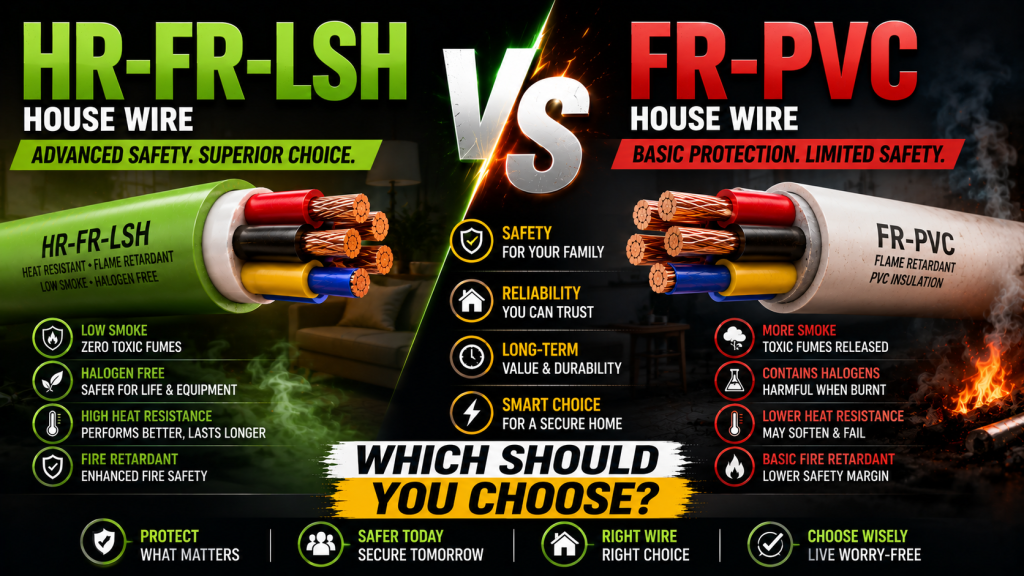
Most casualties in building fires are caused by smoke inhalation and toxic gas, not flames. Ordinary PVC releases dense black smoke and corrosive hydrogen-chloride gas when it burns. Low-smoke, zero-halogen (LSZH/HFFR) cable is engineered to release far less of both — keeping stairwells and corridors more breathable and visible during escape.
What to specify
A sound specification uses two cable types together:
- General circuits — HR-FR-LSH or HFFR grades throughout, so any fault produces minimal smoke and toxic gas.
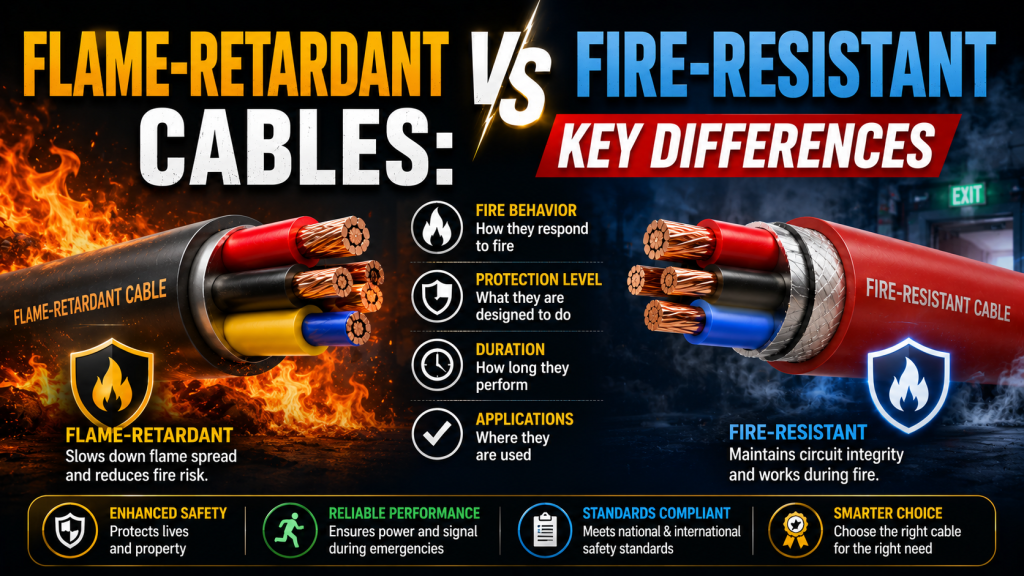
- Life-safety circuits — fire alarms, emergency lighting, lifts and pumps should use fire-resistant (fire-survival) cable that keeps working during a fire.
Always follow the National Building Code and local fire regulations for the occupancy type.
Why it pays off
Premium fire-safe wiring costs a little more upfront but protects lives, reduces post-fire corrosion damage to equipment, and lasts for decades — wiring you install once and rely on for the life of the building.
APAR options
For high-rise and premium residential projects, Anushakti HR-FR-LSH, Shakti FR-LSH and the e-beam Fire Protekt range suit general circuits. See all house wires or contact APAR for project specification.
What fire-safe wiring means for tall buildings
When evacuation takes minutes and stairwells fill with people, the behaviour of the cable in the walls becomes critical. Fire-safe wiring uses flame-retardant, low-smoke, halogen-free cable that resists ignition, slows flame spread and — most importantly — keeps smoke and toxic gas to a minimum so escape routes stay usable. In a high-rise that can be the difference between an orderly exit and a tragedy. Specifying fire-safe wiring such as HR-FR-LSH or HFFR grades throughout residential towers, not just in common areas, is one of the highest-value safety decisions a builder can make.