7 Wiring Mistakes That Cause House Fires in India (and How to Avoid Them)
A handful of common wiring mistakes are behind a large share of house fires in India — and every one of them is avoidable.
The Wiring Mistakes Nobody Warns You About
Most house fires in India don’t begin with a careless flame. They begin behind a switchboard, inside a wall, or under a false ceiling wherever a wire was undersized, overloaded, mismatched, or simply chosen badly during construction. By the time anyone smells smoke, the damage has already been done.
The good news: almost every wiring-related fire is the result of a known, repeated mistake. Once you know what to look for, you can prevent them at the planning stage for the cost of an honest conversation with your electrician.
The 7 Most Common Wiring Mistakes in Indian Homes
1. Using Basic FR Wires on High-Load Circuits
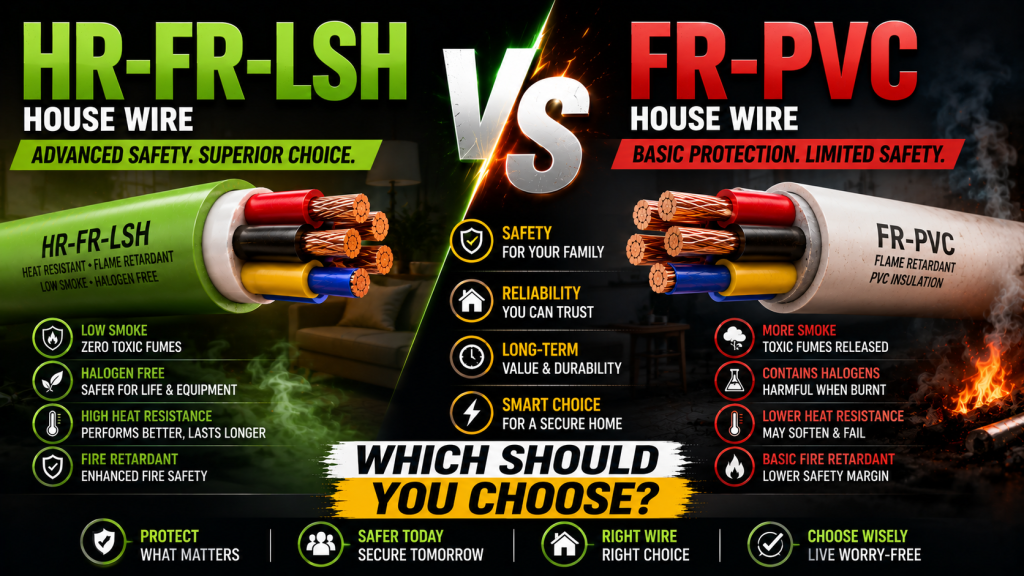
FR (Flame Retardant) wires are fine for general lighting and fans, but using them on heavy circuits like ACs, geysers, and induction cooktops is a known fire risk. High-current circuits need wires built for continuous heat like APAR’s E-Beam engineered Anushakti Fire HR FR PVC, which delivers 50% more current-carrying capacity and a 105°C operating temperature.
2. Skipping Low-Smoke Wires in Living Spaces
In most fires, people are harmed by smoke and toxic fumes long before flames reach them. Bedrooms, living rooms, and children’s rooms deserve FRLS wires at minimum. The APAR Shakti Green Wire HR FR LSH PVC emits significantly fewer toxic fumes and preserves visibility during evacuation.
3. Undersized Wires for the Actual Load
A 1 sq.mm wire on a 2-ton AC line is an overheating event waiting to happen. Each circuit must be sized for the appliance it serves and ideally with 20–30% headroom for future loads.
4. Mixing Brands and Grades Across the Same Home
One room with premium wires and another with cheap unbranded ones creates inconsistent safety. Stick to one trusted brand across the entire installation so safety performance is predictable in every room.
5. Ignoring Rodent and Termite Damage Over Time
Wires inside walls and ceilings are vulnerable to rodents and termites both of which strip insulation and create short-circuit risk years after construction. APAR’s house wire range is built with anti-termite protection and rodent-resistant insulation specifically to address this long-term threat.
6. No Planning for Future Electrical Load
EVs, induction kitchens, additional ACs, home offices modern Indian homes add load year after year. Wiring designed for today’s appliances will be overloaded within five years. Plan for what you’ll need in 2030, not what you have today.
7. No Testing Before Handover
Insulation resistance testing, continuity testing, and earthing verification take a few hours and cost almost nothing. Skipping them is one of the most common and most expensive mistakes a homeowner can let slide.
The APAR Approach: Right Wire for the Right Job
Across these seven mistakes, the pattern is the same: defaulting to a one-size-fits-all wire instead of matching specification to risk. APAR’s house wire portfolio is built to make that mapping easy Shakti FR PVC for general circuits, Green Wire HR FR LSH PVC for high-occupancy rooms, and the Anushakti Fire Protekt EBXL HFFR for high-risk and high-load zones. Every wire in the range is engineered and tested to IS 694:2010 standards.
In Summary: Prevention Is a Design Decision
House fires caused by wiring are almost never accidents. They are the predictable outcome of small, ignored decisions made years earlier. Choose your wires deliberately, ask your electrician hard questions, and treat fire safety as a design problem not a hope.
The costliest wiring mistakes
The most damaging wiring mistakes include undersized conductors, overloaded socket circuits, cheap non-fire-safe wire in concealed conduits, poor earthing, and joints buried in walls. Each quietly raises the risk of overheating and fire. Using the right grade and size of wire, with proper protection, removes most of that risk for very little extra cost.