HFFR Wire for Hospitals, Schools and Public Buildings
Specifying HFFR wire for hospitals, schools and other public buildings is a life-safety decision as much as an electrical one.
Hospitals, schools, malls, offices and airports share one defining priority: protecting large numbers of people, many of whom may need to evacuate quickly. That single fact makes halogen-free, low-smoke (HFFR) wiring the right choice for these buildings.
The risk in public buildings
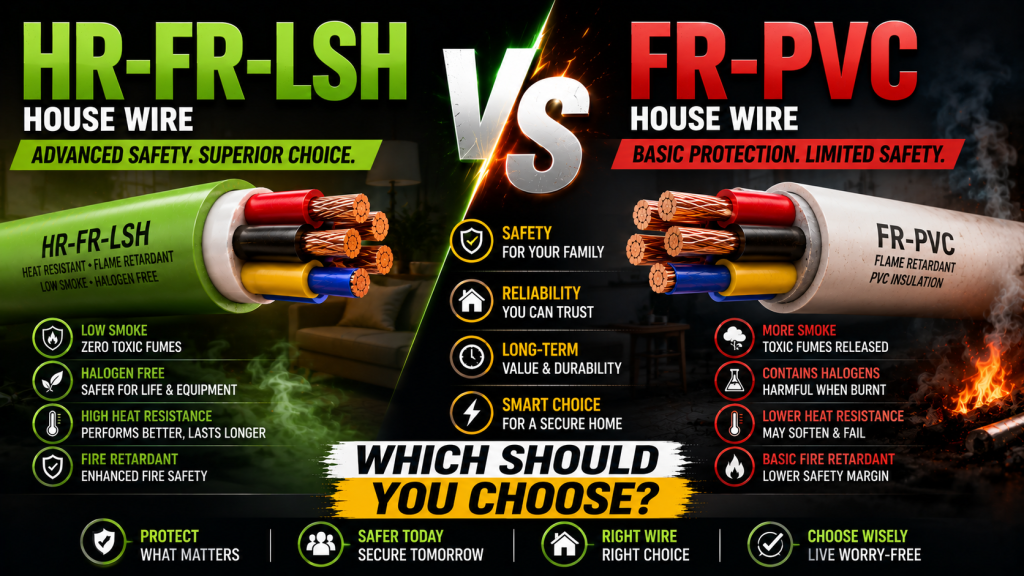
Conventional PVC wiring, in a fire, gives off thick smoke and corrosive, toxic gas. In a crowded or enclosed space that smoke blocks visibility and harms people long before flames reach them. It also corrodes sensitive equipment — a serious issue in hospitals and data-heavy environments.
Why HFFR / LSZH
HFFR (halogen-free flame-retardant) and LSZH cables are formulated to emit very little smoke and negligible halogen gas. The result is clearer air, better visibility and safer conditions for both occupants and firefighters. Many grades, such as HR-FR-LSH, also add heat resistance for demanding loads.
What to use where
- General power and lighting circuits — HR-FR-LSH / HFFR grade.
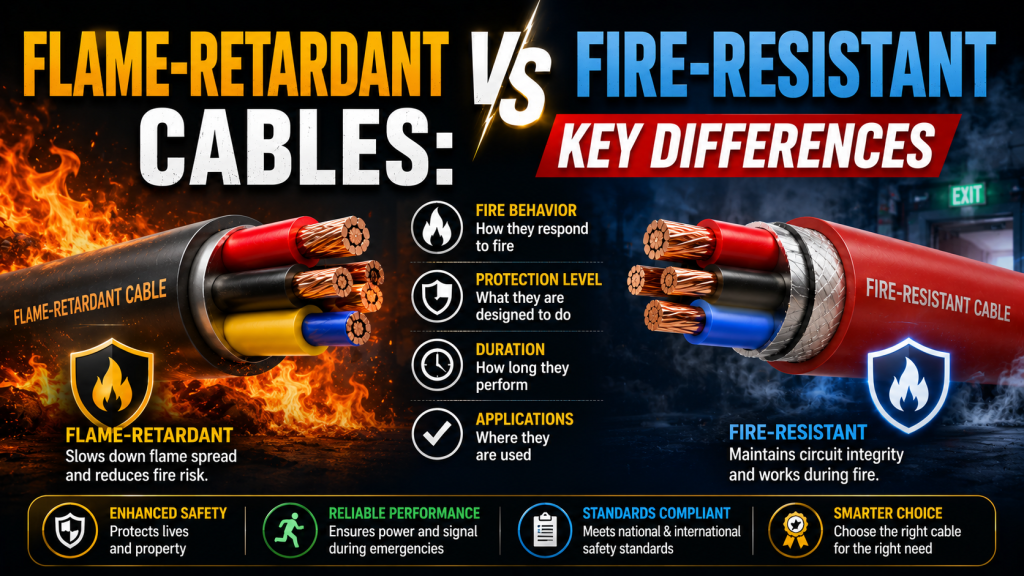
- Emergency systems (alarms, lifts, emergency lighting) — fire-resistant cable.
- Always follow the applicable fire codes for the occupancy.
APAR recommendation
APAR Anushakti Fire Protekt (EBXL HFFR) and Anushakti HR-FR-LSH are built for exactly these environments — e-beam, halogen-free and low-smoke. Contact APAR for project specification, or browse all house wires.
Why HFFR wire for hospitals and public buildings
In a fire, the danger in a crowded building is rarely the flame alone — it is the smoke. Ordinary PVC wiring gives off dense, dark smoke and corrosive halogen gases that obscure exits, harm lungs and damage sensitive equipment. HFFR (halogen-free flame-retardant) wire resists flame while emitting very little smoke and no halogen, so escape routes stay visible and breathable for longer. That matters most where people cannot leave quickly — hospitals with bedridden patients, schools full of children and busy public buildings. Choosing HFFR wire for hospitals and similar spaces is a small cost difference that buys a large safety margin.