Cable Solutions · Electrical Cables
Concentric core (anti-theft) cables
APAR UNIDAC — concentric core anti-theft cables for utility power distribution
ConstructionConcentric, central phase conductor
ConfigurationsCNE and SNE
Standard sizes1×6/6 to 1×25/25
ApplicationSingle-phase house service
✓ Anti-theft
✓ CNE
✓ SNE
✓ Utility service
Description
OverviewThe defining feature of the UNIDAC cable is its concentric design: the phase conductor sits safely in the middle of the cable, and a concentric neutral arrangement covers and insulates the core. Because any attempt to reach the phase conductor must first pass through the surrounding neutral layer, unauthorised tapping is both difficult to achieve and hard to hide. The concentric construction also keeps the overall diameter small, which makes the cable straightforward to install on house-service connections and in dense distribution networks. APAR manufactures the range for single-phase supply and cable-to-house service connections, particularly for African and Latin American utilities where power pilferage is a persistent commercial loss. UNIDAC is available in both CNE and SNE configurations, and can be supplied with integrated communication pairs. Higher sizes and multi-core constructions are manufactured to order.
House-service concentric cable solutions for African and Latin American markets. APAR's UNIDAC range helps utilities prevent electricity theft with affordable, efficient house-service power distribution concentric core cables.
Why this wire
Key benefits Anti-theft construction Concentric layers make unauthorised access to the phase conductor difficult.
Compact diameter The concentric design keeps the overall diameter small.
House-service ready Built for cable-to-house connections and utility distribution.
CNE and SNE Available in combined and separate neutral-and-earth arrangements.
Communication pairs Can be supplied with communication pairs integrated.
Made to order Higher sizes and multi-core constructions manufactured on request.
Characteristics
At a glance| Application | Single-phase supply and cable-to-house service connections for smaller single-phase users, in networks where theft and power pilferage are common. |
|---|---|
| Characteristics | UNIDAC has a small overall diameter because of its concentric design. |
| Configurations | CNE (combined neutral and earth) and SNE (separate neutral and earth). These cables can also be offered with communication pairs. |
| Product range | 1×6/6, 1×10/10, 1×16/16 and 1×25/25. Higher sizes and multi-core cables can be manufactured on request. |
| Advantages | Helps prevent unauthorised access to the phase conductor, which is insulated and enclosed by the concentric layers. |
Construction
Cutaway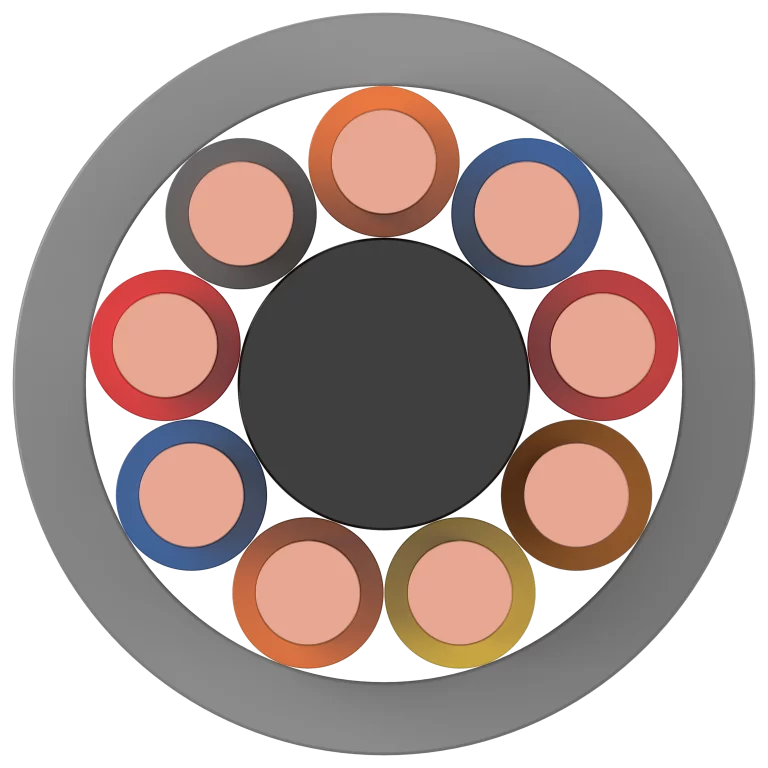
- 1ConductorStranded, sized and specified for the application
- 2InsulationCompound selected for the product type and temperature rating
- 3Printed identificationGrade, size, voltage and applicable standard
Dimensions & ratings
Technical dataStandard product range
| Cable size (phase / concentric neutral) | Configuration | Availability |
|---|---|---|
| 1×6/6 | CNE or SNE | Standard range |
| 1×10/10 | CNE or SNE | Standard range |
| 1×16/16 | CNE or SNE | Standard range |
| 1×25/25 | CNE or SNE | Standard range |
| Higher sizes | CNE or SNE | Manufactured on request |
| Multi-core cables | CNE or SNE | Manufactured on request |
Standards & approvals
ComplianceUNIDAC is supplied in the two concentric arrangements used by distribution utilities: CNE, where a single concentric layer serves as combined neutral and earth, and SNE (split concentric), where the neutral and earth are separate sets of wires laid up concentrically. Note that CNE and SNE describe the conductor arrangement, not a standard in themselves.
Internationally, concentric service cables of this type are specified under BS 7870 Part 3 — the low-voltage distribution cable series for utility use at 0.6/1 kV, which covers both CNE service cables and split-concentric (SNE) constructions — and historically under BS 4553. Utilities in Africa and Latin America commonly purchase against their own national or network specifications derived from these.
APAR manufactures UNIDAC to the purchasing utility's specification. Please confirm the governing standard for your tender and we will supply the corresponding type-test certificates and detailed technical particulars.
Applications
Where it's usedSingle-phase supplyCable-to-house service connections for smaller single-phase usersUtility power distribution networksAreas where electricity theft and power pilferage are commonHouse-service applications in African and Latin American markets
Not sure which size you need?
Open calculator →Use the APAR Wire-Size Calculator to size a circuit in seconds.
Documents
DownloadsFAQs
Good to knowThe phase conductor runs down the centre of the cable and is completely enclosed by the concentric neutral layer. Reaching the phase conductor means cutting through the neutral first, which makes an illegal connection difficult to make and difficult to conceal.
In a CNE cable a single concentric layer acts as combined neutral and earth. In an SNE (split concentric) cable the neutral and earth are separate sets of wires laid up in the same concentric layer. Which one you need is normally set by the utility's own network specification.
The standard range is 1×6/6, 1×10/10, 1×16/16 and 1×25/25 — the two figures being the phase and concentric neutral cross-sections. Higher sizes and multi-core cables are manufactured on request.
Yes. UNIDAC can be supplied with communication pairs integrated into the cable, which is useful where metering or network communications run alongside the service connection.
The range was developed for house-service power distribution in African and Latin American markets, where commercial losses from power pilferage are a significant concern for utilities.
Send us your required sizes, configuration (CNE or SNE), quantity and the governing specification using the enquiry form on this page and our team will respond with a quotation and full technical particulars.
Sizing or selecting a cable? Browse our guides & charts →
Request information
Get a quoteRequest a quote
Tell us your requirement — our team will get back to you.
Enquiry about: Concentric core (anti-theft) cables · Electrical Cables
✓ We reply within 1 business day✓ No spam — your details are used only for this enquiry
Get Concentric core (anti-theft) cables
Enquire for pricing, request the datasheet, or apply to become an authorised dealer.