
Cable Solutions · Light Duty Cables & Wires
Fire alarm cables
Fire alarm and life-safety circuit cables.
Voltage gradeUp to 1100 V
ConductorStranded class-2 copper
Operating temperature90 °C maximum
ArmourGI round wire, or unarmoured
✓ Up to 1100 V
✓ 90 °C / 250 °C
✓ Red FR-LSH sheath
✓ Armoured or unarmoured
Description
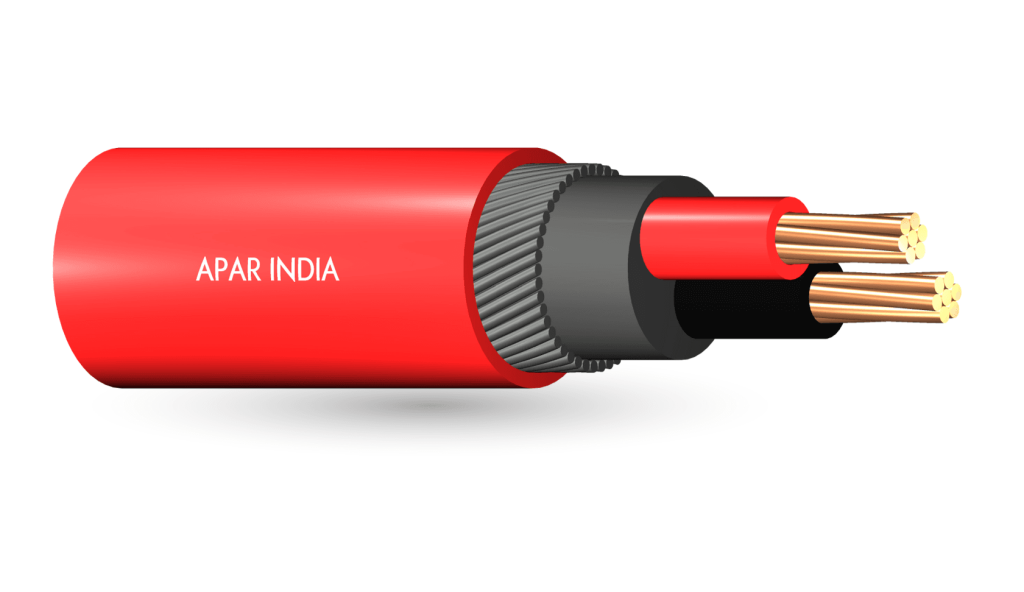
OverviewFire detection and alarm circuits have an unusual job description. Almost every other cable in a building is expected to fail safely in a fire; this one is expected to keep carrying its signal through it, long enough for the panel to sound and the building to empty. APAR's fire alarm cables are built for that duty, with a stranded circular class-2 copper conductor, XLPE insulation, an extruded PVC inner sheath, galvanised steel round wire armour and an overall extruded FR-LSH PVC outer sheath in red. They are rated up to and including 1100 V, with a maximum conductor temperature of 90 °C in service and 250 °C under short-circuit conditions, and are made in armoured and unarmoured unshielded multicore constructions. The red sheath is a working safety feature: in a ceiling void carrying forty cables, it tells an electrician at a glance which one not to cut.
Fire detection and alarm circuits must keep working while a fire develops. Built for fire performance and low smoke so alarm and evacuation systems stay operable when they are needed most.
Why this wire
Key benefits Red FR-LSH sheath Flame retardant and low smoke, and identifiable as a life-safety circuit at a glance.
XLPE insulated 90 °C in service, and 250 °C maximum conductor temperature under short circuit.
Steel wire armour Galvanised round wire armour for risers, shafts and ceiling voids.
Up to 1100 V Stranded circular class-2 copper conductor, armoured or unarmoured.
Built to your specification Standard, core count and size confirmed against your project documents.
NABL-tested Tested in APAR's own NABL-accredited laboratory, with certificates on request.
Characteristics
At a glance| Application | Armoured and unarmoured unshielded multicore fire alarm cables for high-rise buildings, commercial complexes, schools and other educational institutions, and hospitals. They connect the fire detection and life-safety devices a building depends on, including smoke detectors, emergency lighting, exit signage and the fire command centre. |
|---|---|
| Characteristics | Stranded circular class-2 copper conductor, XLPE insulated, extruded PVC inner sheath, galvanised steel round wire armour, and an overall extruded FR-LSH PVC outer sheath in red. Voltage grade: up to and including 1100 V Maximum operating temperature: 90 °C Maximum conductor temperature at short circuit: 250 °C |
| Applicable standards | Fire alarm cable is built to the standard named in the project specification rather than to one fixed standard, so the applicable standard is confirmed against your tender documents at the enquiry stage. Cables are tested in APAR's NABL-accredited laboratory and test certificates are issued on request. |
| Product range | Armoured and unarmoured unshielded multicore constructions, rated up to and including 1100 V. Core count and conductor size are built to the requirement of the project, so please send your cable schedule with the enquiry. |
| Advantages | These cables work with the detection and alarm equipment a building relies on, including smoke and heat detectors and annunciator panels. The XLPE insulation holds its properties as temperature climbs where PVC would soften, the FR-LSH sheath limits flame spread and smoke, the galvanised steel wire armour protects the run through risers and ceiling voids, and the red sheath makes a life-safety circuit obvious to anyone else working on the same route. |
Construction
Cutaway123
- 1ConductorStranded, sized and specified for the application
- 2InsulationCompound selected for the product type and temperature rating
- 3Printed identificationGrade, size, voltage and applicable standard
Standards & approvals
ComplianceFire alarm cable is manufactured to the standard named in your project specification rather than to a single fixed standard, and is tested in APAR's NABL-accredited laboratory. Please share your tender documents so the applicable standard, test certificates and detailed specifications can be confirmed for your project.
Applications
Where it's usedHigh rise buildingsCommercial complexesSchools and educational institutionsHospitalsFire command centresEmergency lighting and exit signage circuits
Not sure which size you need?
Open calculator →Use the APAR Wire-Size Calculator to size a circuit in seconds.
Documents
DownloadsFAQs
Good to knowIn buildings where a lot of people depend on the alarm system working: high-rise residential and office blocks, commercial complexes, schools and colleges, and hospitals. The cable connects smoke and heat detectors, emergency lighting, exit signage and the fire command centre back to the panel.
Two reasons. The compound is FR-LSH, so it is flame retardant and gives off less smoke and halogen than ordinary PVC. The colour is an identification feature: in a ceiling void or riser carrying dozens of cables, red marks the life-safety circuit that must not be cut or reused.
Yes. Galvanised steel round wire armour is the usual choice for riser, buried and shared-route runs where the cable can take a knock. A short surface run inside an already-protected shaft often does not need it. Both are unshielded multicore constructions.
Whichever standard your project specification names. Fire alarm cable is ordered against the consultant's or tender requirement rather than a single fixed standard, so send the relevant documents with your enquiry and APAR will confirm the specification, along with test certificates from its NABL-accredited laboratory.
Use the enquiry form on this page or the Request a Quote option, and APAR's team will respond with availability and details for your requirement.
Sizing or selecting a cable? Browse our guides & charts →
Request information
Get a quoteRequest a quote
Tell us your requirement — our team will get back to you.
Enquiry about: Fire alarm cables · Light Duty Cables & Wires
✓ We reply within 1 business day✓ No spam — your details are used only for this enquiry
Get Fire alarm cables
Enquire for pricing, request the datasheet, or apply to become an authorised dealer.