Cat5e vs Cat6 LAN Cable: Which for Your Network?
The Cat5e vs Cat6 decision shapes your network for years, so it is worth getting right before the cable goes into the wall.
Wiring a home or office network is a decision you live with for years, so the LAN cable category you choose matters for both speed and future-proofing. The two mainstream choices are Cat5e and Cat6.
What a LAN cable does
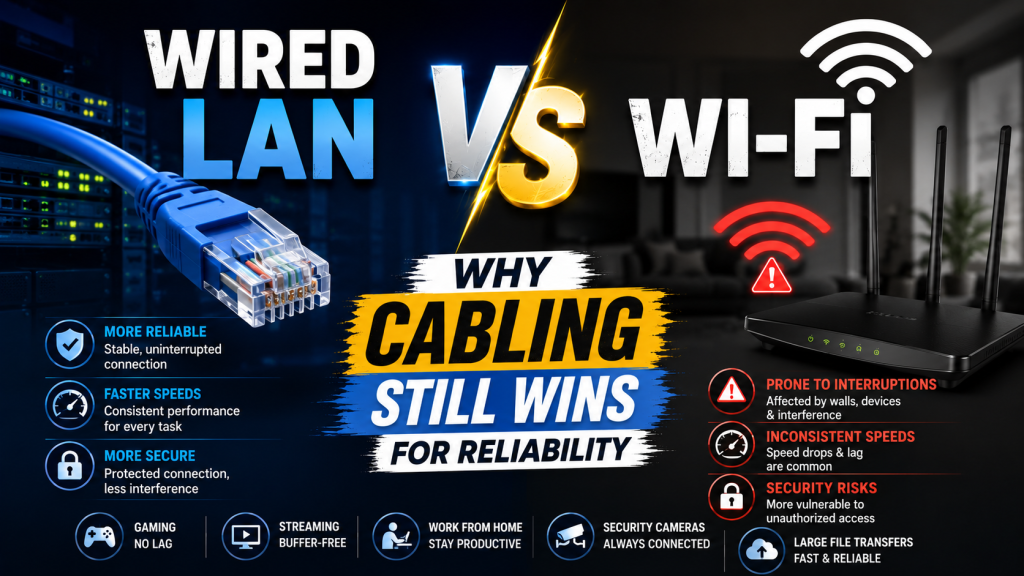
A LAN (Ethernet) cable connects routers, computers and devices for wired networking. Inside are four twisted pairs of copper wires; the twisting and shielding control interference and signal quality.
Cat5e
Supports gigabit (1 Gbps) speeds over normal runs and is economical and widely compatible — perfectly adequate for most homes and small offices.
Cat6
Tighter construction (often with a separator/spline) gives higher bandwidth, lower error rates and better performance over longer runs or for heavier data — the future-proof choice for new builds, offices and anything carrying high traffic.
How to choose
- Light home use, budget-conscious: Cat5e.
- New wiring, offices, future-proofing, long runs: Cat6.
- Either way, use solid copper conductors and keep runs within ~90 m for reliable performance.
APAR option
APAR Tarang Shakti LAN cable comes in Cat5e and Cat6 with four twisted copper pairs for fast, low-error connectivity. Browse all communication cables or contact us.
Cat5e vs Cat6: which should you run?
Both Cat5e and Cat6 carry Gigabit Ethernet, so for everyday home internet either is fine. The difference shows as your needs grow. Cat6 has tighter construction and higher bandwidth (250 MHz vs 100 MHz), supports 10 Gigabit over shorter runs and handles interference better — useful for offices, gaming, 4K streaming and future-proofing. Cat5e is cheaper and easier to terminate, and stays a sensible choice for light, cost-sensitive installs. The practical rule in the Cat5e vs Cat6 choice: for new wiring you intend to keep for a decade, run Cat6; for a quick, budget-friendly upgrade where Gigabit is enough, Cat5e still does the job. Either way, choose a quality APAR LAN cable and terminate it cleanly.