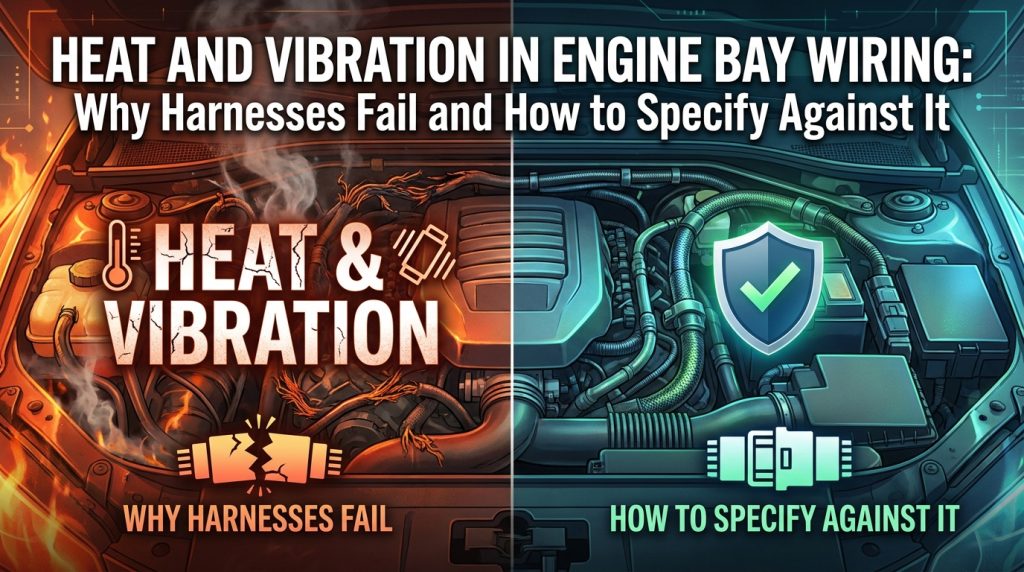
EN 45545-2 on Rail Harnesses: What Fire Compliance Means for the Cables Inside
A railway harness can pass every continuity test and still fail a tender on fire grounds. The reason is that EN 45545-2 judges the fire behaviour of materials and components, not the finished assembly, and a harness contains several materials from several makers: cable, sleeving, conduit, tape, connector housings and overmoulds. If only the cable has fire data, the assembly has a gap.
This article explains what the standard asks of cables, where harness assemblies usually fall short, and how a buyer can specify the whole assembly so that no gap is left.
What EN 45545-2 asks of a cable
EN 45545-2 sets fire behaviour requirements for materials and components used on railway vehicles. How strict those requirements are depends on the hazard level, HL1 to HL3, which is derived from how the vehicle is operated and built. Higher levels apply where evacuation is likely to be slow, for example on vehicles that run through tunnels or carry sleeping passengers.
Each material or component is placed in a requirement set. For cables the sets are R15 for interior cables and R16 for exterior cables. The tests behind them cover three behaviours: how far flame travels along a single insulated wire (EN 60332-1-2) and along vertically mounted bunches of cables (EN 60332-3-24, or the EN 50305 variants for smaller diameters), how much smoke the burning cable produces (EN 61034-2), and how toxic the fumes are (the toxicity index method in EN 50305).
The standard also recognises cables made to EN 50264, EN 50306 or EN 50382 as meeting R15 and R16 for the corresponding hazard level. This is why many railway cable datasheets cite one of those cable standards instead of listing every fire test. The buyer should still confirm the current edition of the standard and the hazard level named in the tender.
Where the harness gap appears
The cable line on a harness bill of materials is rarely the weak point, because a railway cable standard already carries the fire tests. The gaps sit elsewhere.
One gap is accessories. Sleeves, corrugated conduit, adhesive tapes, grommets, cable ties, heat-shrink, connector bodies and overmoulds are all components, and none of them is covered by a cable standard. A harness maker that buys them from several suppliers may be unable to produce fire data for each one, and a tender evaluator reading the bill of materials sees certificates against the cable lines and nothing against the rest.
Another is hazard level mismatch. A cable certified for a lower hazard level cannot simply be used on a vehicle classified higher, and the same harness may run partly inside the saloon and partly in the underframe, which are different requirement sets.
A further gap is certificate scope. A test report applies to a specific cable construction. A change of insulation compound or wall thickness after the report was issued means the report no longer describes the cable that is being delivered.
How to specify it
APAR recommends that the enquiry for a rail harness states the following, so that the quotation and the certificates can be matched to the drawing from the start:
- The hazard level, and whether each circuit runs in an interior or exterior zone.
- The cable standard required, with test certificates issued for the exact cable construction to be supplied.
- A fire data reference for every non-cable item on the bill of materials, including sleeving, conduit, tape and connector housings.
- The revision of the drawing and the revision of each certificate, recorded together, so that a later change of material triggers a review.
- Which document prevails when a tender cites both EN 45545-2 and a railway specification such as ELRS or RDSO. The railway harness specification reference lists the Indian documents that usually govern coach and locomotive harnesses.
What APAR documents on its rail products
APAR’s railway and rolling stock cables page lists EN 50264 and EN 50306 among the applicable standards, states that the cables are manufactured and tested to EN 50264, and notes that full test certificates are available on request. The railway coach harness page describes harnesses built to rail fire-safety requirements with fire-retardant accessories, and the locomotive harness page describes assemblies made from fire-performance rail cable to the customer schematic, fully terminated and continuity-tested before dispatch.
Those pages do not state EN 45545-2 hazard levels. A buyer who needs a specific hazard level should therefore name it at enquiry and ask for the matching certificate for each component, rather than assuming it from the product description. Once the fire data is agreed, the remaining checks are mechanical: the rolling stock harness routing guide covers segregation and protection on the vehicle, and the harness testing guide covers what to verify before the assembly ships.
Fire compliance on a rail harness is a documentation problem as much as a materials problem. The assembly passes only when every line on the bill of materials can be traced to a report that matches the hazard level on the tender.
Related
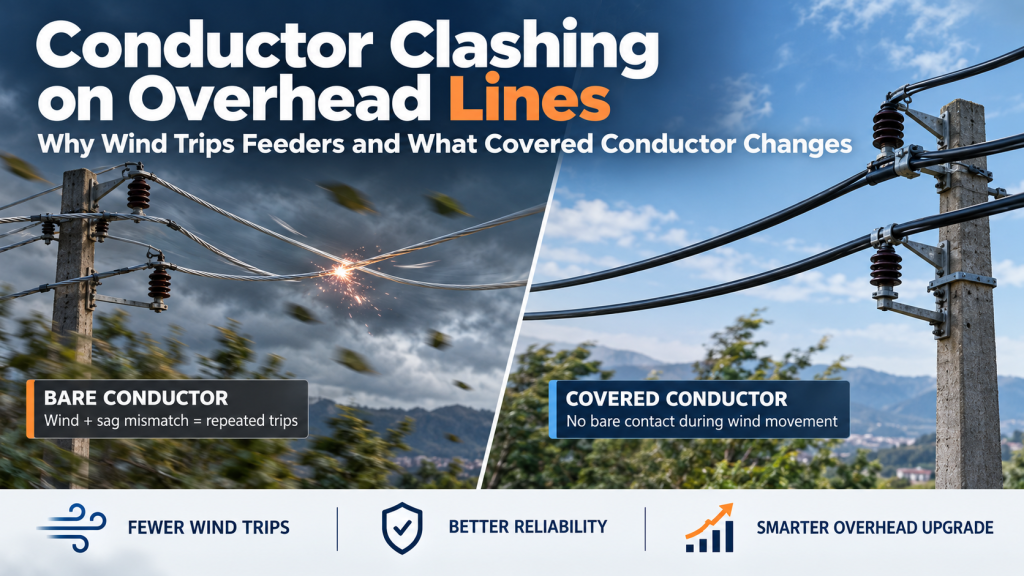
Conductor Clashing on Overhead Lines: Why Wind Trips Feeders and What Covered Conductor Changes
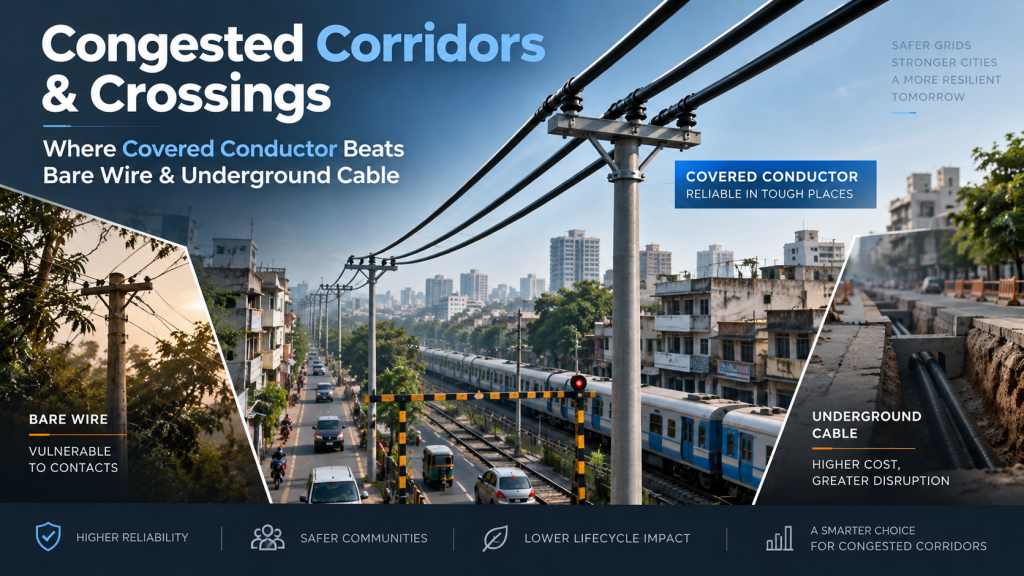
Congested Corridors and Crossings: Where Covered Conductor Beats Bare Wire and Underground Cable