The 50°C Problem: How Heat Quietly Derates Your Cables
Every cable catalogue quietly assumes the weather: 40°C air, 30°C soil. Churu in May doesn’t cooperate.
Here’s the uncomfortable arithmetic. A cable’s rating is set by the gap between ambient temperature and the insulation’s limit — 90°C for ordinary XLPE. Hotter surroundings, smaller gap, lower rating. The correction factors for MV cable spell it out: at 45°C air you keep 95% of the catalogue figure. At 50°C, 89%. At 55°C — a rooftop tray in direct sun gets there — you’re down to 84%, and at 60°C you’ve lost nearly a quarter of the cable you paid for.
Buried runs don’t escape. Soil at 40°C pulls the rating to 0.91, at 50°C to 0.82. Lay deeper than the standard 900 mm and there’s another few percent gone. These factors multiply each other. It’s entirely possible to sign off a feeder that looks comfortable on paper and arrives on site with a fifth of its capacity already spent on the weather.
The old fix is honest but expensive: buy a bigger conductor than the load needs, so the derated cable still covers it. More copper, bigger lugs and glands, sometimes a duct that no longer fits the cable you now need. It works. It always works. It just costs.
The other fix moves the goalposts instead. Insulate for 105°C rather than 90 and the ambient-to-limit gap widens by 15 degrees, which is worth up to 15% more current from the very same cross-section. Notice the elegance: the benefit is biggest exactly where the heat is worst, because that’s where the conventional cable loses the most. This construction exists precisely for north Indian summers and Gulf installations that see 55°C.
Where does this bite first? Rooftop and tray runs in sun. Congested trenches where grouped cables cook each other. Old duct banks whose loads have grown — because a 105°C cable adds capacity through the existing route, no civil work, no new trench.
The full correction tables are on our derating factors chart, and the cable itself is here: high ampacity XLPE, 105°C. Send our technical team the real conditions — ambient, depth, grouping — and they’ll give you the real rating, not the brochure one.
Related
EN 45545-2 on Rail Harnesses: What Fire Compliance Means for the Cables Inside
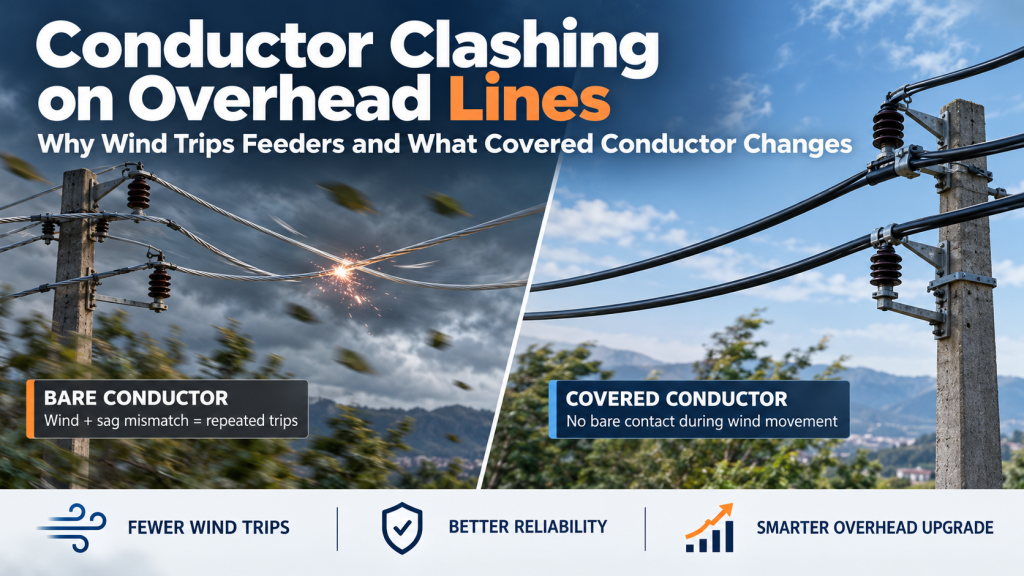
Conductor Clashing on Overhead Lines: Why Wind Trips Feeders and What Covered Conductor Changes