Choosing Solar DC Cable: Why BS EN 50618 Is the Line Worth Drawing
Solar DC cable gets the worst job on the whole building. Twenty-five years on a hot roof. UV all day, ozone, monsoon, and a DC voltage that never once lets the insulation rest. It’s also, too often, the line item someone shaves at the last minute. The difference between certified solar cable and a lookalike doesn’t show up at commissioning — it shows up around year six.
The standard that separates them is BS EN 50618:2014 — the H1Z2Z2K cable. It certifies the actual job: 1.5 kV DC, electron-beam cross-linked halogen-free insulation and sheath, UV and ozone endurance, tested around a service life beyond 25 years. IEC 62930:2017 says the same thing internationally; UL 4703 covers the 2 kV American market. A cable wearing those marks has been proven against sunlight, heat and DC. A “PV wire” without them has been proven against nothing in particular.
Want to check a datasheet in thirty seconds? Look at the conductor resistance. Real solar cable uses fine tinned copper strands — the tin stops decades of slow oxidation — and tinning honestly costs about 2% in resistance. So a genuine sheet reads 8.21 Ω/km at 2.5 sq mm, a touch above the bare-copper 7.98. A sheet showing bare-copper numbers on a supposedly tinned cable is telling you something.
The other number worth respecting is 120°C continuous. Cable tucked behind a panel in May sees far more than air temperature, and at a realistic 60°C ambient the ratings are what they are: 55 A on 4 sq mm, 70 A on 6. Size from a 30°C table and your strings will run warm forever.
Sizing itself is mostly a voltage-drop exercise — long DC home runs at low voltage bleed real energy, and an extra size of copper usually pays for itself in yield. The method is in our rooftop sizing guide, and the full table from 2.5 to 300 sq mm is on the solar DC cable chart.
Ours is made in-house on India’s largest e-beam facility and carries the full set — BS EN 50618, IEC 62930, UL 4703, TÜV. Details on the solar cables page, aluminium variants included.
Related
EN 45545-2 on Rail Harnesses: What Fire Compliance Means for the Cables Inside
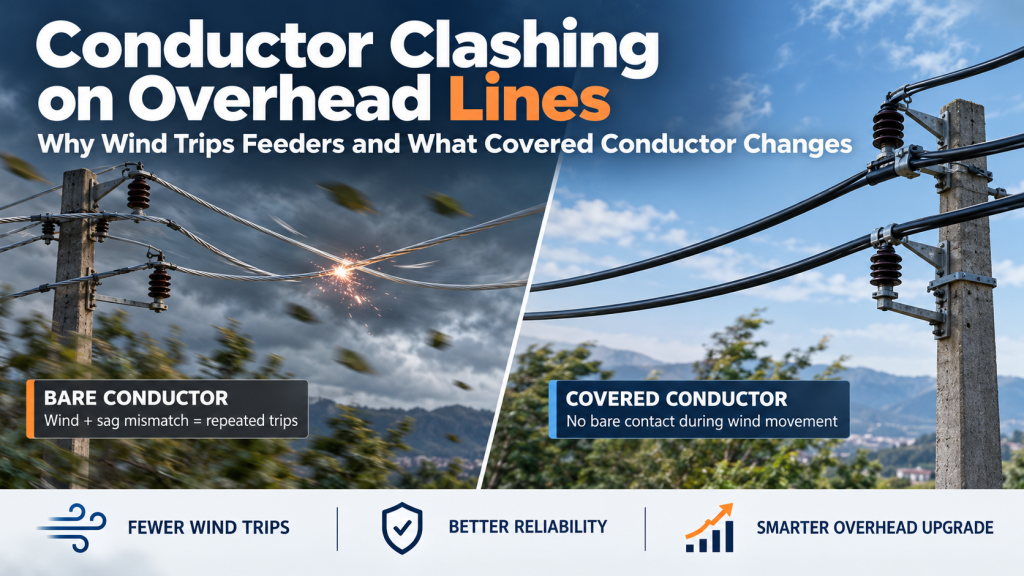
Conductor Clashing on Overhead Lines: Why Wind Trips Feeders and What Covered Conductor Changes