Best Fire-Resistant House Wire in India: A 2026 Buyer’s Guide
If you are shopping for the best fire-resistant house wire in India, this guide cuts through the grades and the jargon so you can choose with confidence.
Behind every wall in your home sits a network of electrical wire you will probably never see again for decades. That makes the choice of house wire one of the most important — and most overlooked — safety decisions in any building project. This guide explains what makes a wire genuinely fire-resistant, and how to choose the right grade for your home in 2026.
What actually makes a wire fire-resistant?
Fire safety lives in the insulation, not the copper. The grades you will see, from basic to best, are:
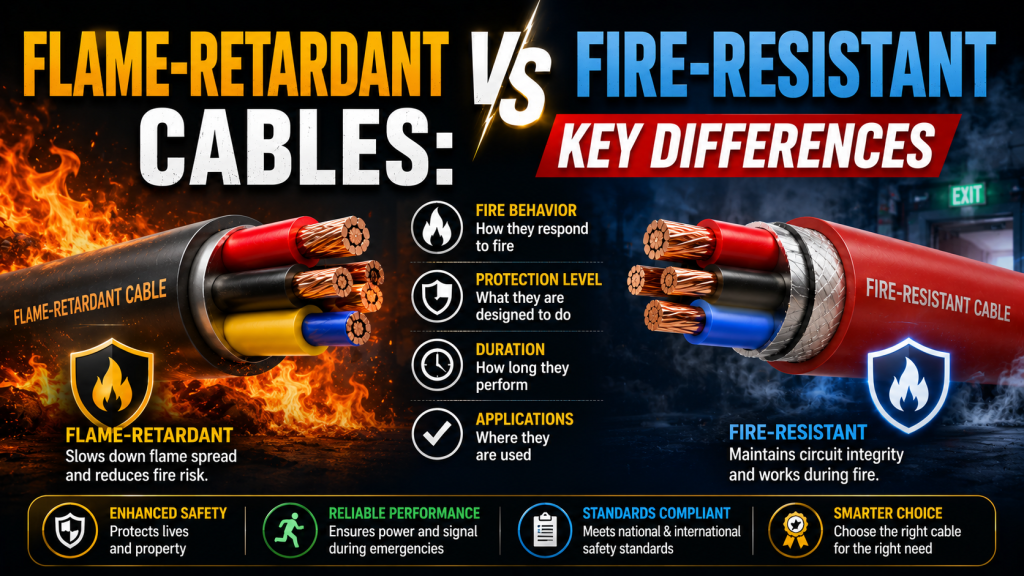
- FR — flame-retardant: resists the spread of flame and self-extinguishes.
- FR-LS / FR-LSH — adds low smoke and low halogen, so less toxic, blinding smoke in a fire.
- HR-FR-LSH — adds heat resistance on top: the safest common house-wire grade.
- HFFR / EBXL — halogen-free, e-beam cross-linked premium wire that is also melt-resistant and extremely long-lived.
Why does smoke matter so much? In most fatal fires it is smoke and toxic gas — not flames — that harm people first. Low-smoke, low-halogen wiring keeps escape routes clearer.
What to check before you buy
Beyond the grade, confirm the essentials: the ISI mark against IS 694; high-purity electrolytic copper for low resistance; the correct conductor size for your load; and a reputable manufacturer. Suspiciously cheap wire is a false economy and a fire risk.
Which grade for which home?
For budget-sensitive circuits, a quality FR-PVC wire is fine. For most modern homes — and essential for high-rises, homes with children or elderly members, and anywhere fire safety is a priority — step up to HR-FR-LSH or the premium Anushakti Fire Protekt (EBXL HFFR), which adds e-beam durability and up to 100% more current-carrying capacity.
The bottom line
The best fire-resistant house wire is the one matched to your home’s risk and load, from a trusted, certified manufacturer. Explore APAR’s house wires and cables, review our certifications, or contact our team for help choosing.
Choosing a fire-resistant house wire
A good fire-resistant house wire does three things: it resists igniting, slows the spread of flame, and in better grades gives off little smoke and no toxic halogen gas. FR is the baseline, FRLS adds low smoke, and HR-FR-LSH or HFFR add heat resistance and halogen-free performance for the safest homes. Match the grade to where the wire runs and who lives there.
Related reading
- The wider house wire buying guide. Fire performance is one factor of several.
- Reading a wire label. What FR, FRLS and HFFR mean on the box.