HR-FR-LSH vs FR-PVC House Wire: Which Should You Choose?
The HR-FR-LSH vs FR-PVC choice decides how your wiring behaves on the worst day — when there is a fire in the wall.
Two of the most common house-wire grades in India are FR-PVC and HR-FR-LSH. Both are flame-retardant and safe when installed correctly — the real question is how much extra protection and performance you want behind your walls. Here’s a side-by-side look.
FR-PVC: the economical, reliable choice
Shakti FR-PVC is a flame-retardant PVC house wire. It resists the spread of flame and self-extinguishes, and suits everyday home and building circuits at a lower cost. For general-purpose wiring on a budget, it does the job well.
HR-FR-LSH: the safety upgrade
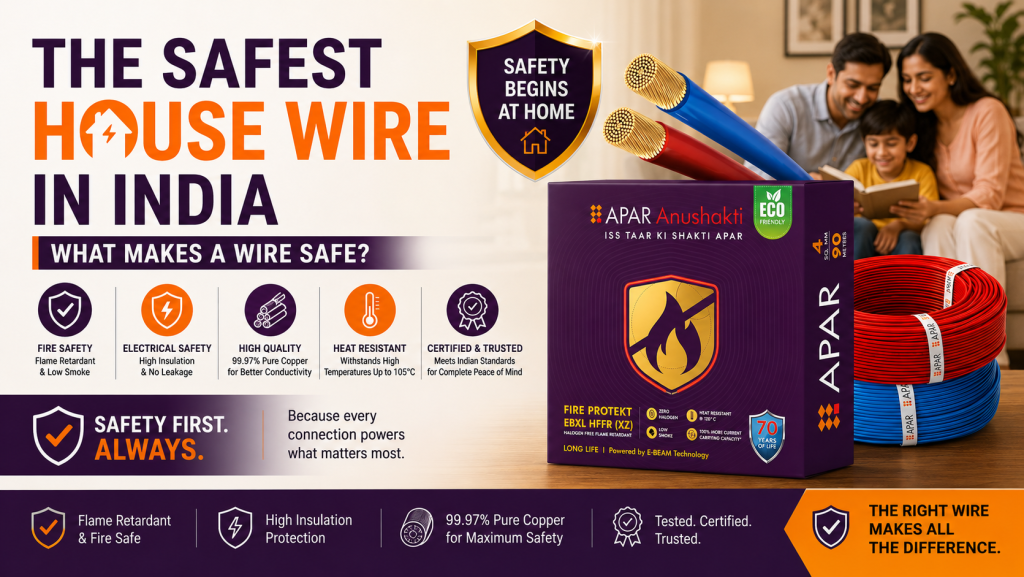
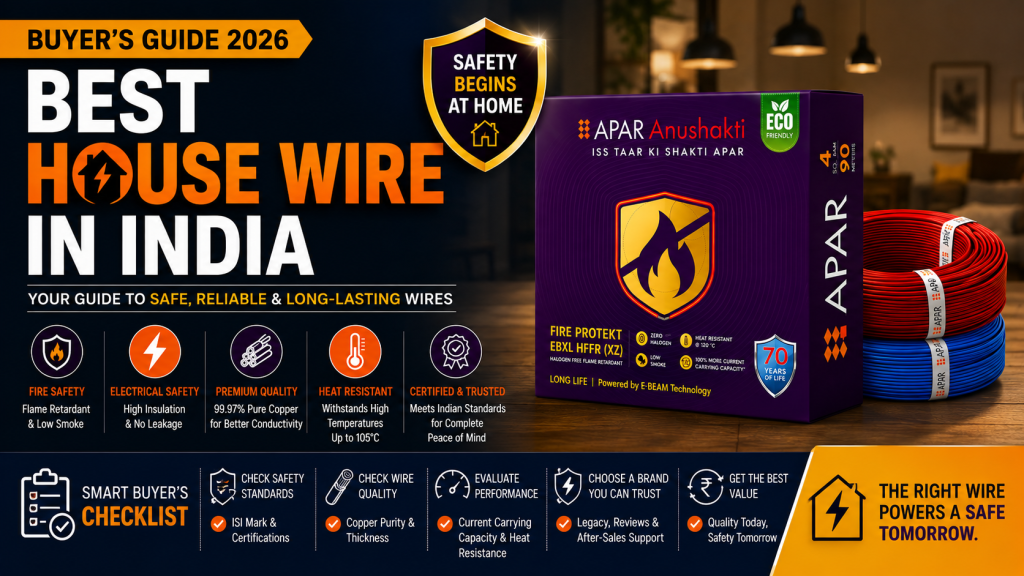
Anushakti HR-FR-LSH adds three things on top of flame retardance:
- Heat resistance — a higher operating temperature for today’s heavier loads;
- Low smoke & low halogen — far less toxic, blinding smoke in a fire (see why this matters);
- E-beam durability — melt resistance and up to 50% more current-carrying capacity.
Read what HR-FR-LSH means for the full breakdown.
Which should you pick?
For budget-sensitive circuits, FR-PVC is perfectly adequate. For homes with children or elderly members, high-rises, hospitals, or anywhere fire safety is a priority, HR-FR-LSH — or the premium Fire Protekt — is the smarter long-term choice. The price difference is small relative to the decades the wiring stays in your walls.
The verdict
Choose FR-PVC for value, HR-FR-LSH for safety and longevity. Compare both in the APAR house wires range or contact us for advice.
HR-FR-LSH vs FR-PVC: which should you choose?
FR-PVC is flame-retardant PVC wire — a sound, economical choice that resists the spread of flame. HR-FR-LSH goes further: it is heat-resistant and low-smoke-halogen, so it tolerates higher operating temperatures and, crucially, gives off far less smoke and corrosive gas if it burns. For budget circuits in well-ventilated spaces, FR-PVC is fine. For homes, and anywhere people sleep or gather, the lower smoke and higher heat tolerance of HR-FR-LSH make it the safer pick. Weigh HR-FR-LSH vs FR-PVC on where the wire runs and who is nearby, and spend a little more on the safer grade where it counts.
Related reading
- Decoding wire labels: ISI, FR, FRLS, HFFR and HR. What every code on the box stands for.
- Which grade belongs behind your walls. Choosing between all four grades, not just these two.
- Anushakti HR-FR-LSH. Specifications for the HR-FR-LSH grade.
- Shakti FR-PVC. Specifications for the FR-PVC grade.